
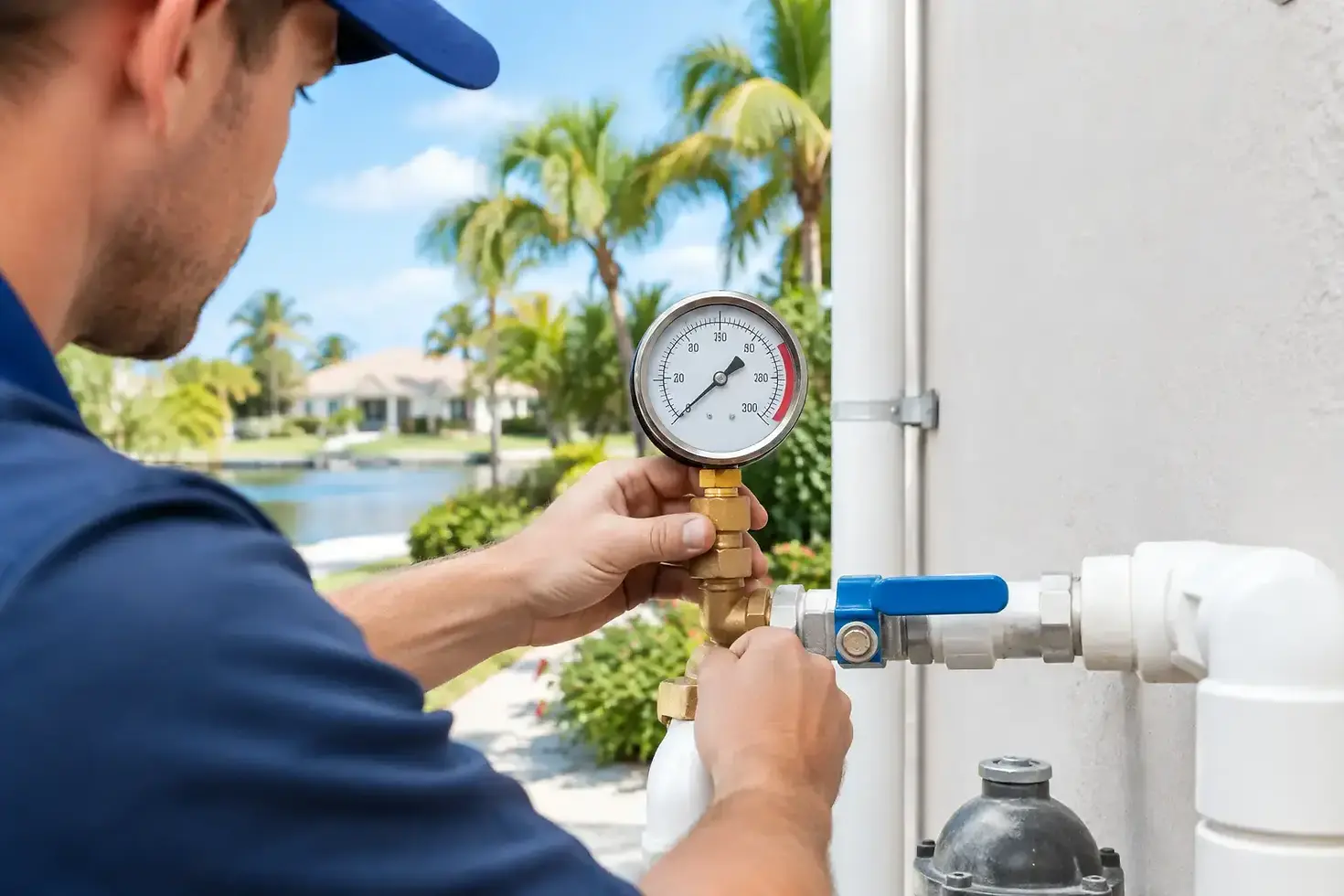
Plumbing Pressure Guide for Florida Homes
A plumbing pressure guide can help you tell the difference between a minor fixture issue and a problem that could put pipes, appliances, and your property at risk. Water that barely reaches the shower is frustrating. Water that blasts from every faucet may seem convenient, but excessive pressure can quietly wear out supply lines, valves, water heaters, and fixtures.
For homeowners and property managers in South Florida, pressure problems may come from the municipal supply, a pressure-reducing valve, aging plumbing, mineral buildup, corrosion, or a localized blockage. The right next step depends on where the problem appears and whether the pressure is too low, too high, or simply inconsistent.
What Is Normal Water Pressure?
Residential water pressure is measured in pounds per square inch, or psi. Most homes operate well with pressure between 40 and 60 psi. Pressure approaching or exceeding 80 psi should be addressed promptly. At that level, the plumbing system is working harder than it should, and the risk of leaks and premature fixture failure increases.
A pressure reading can also change during the day. Municipal demand is often higher in the morning and evening, when neighborhoods are using more water. That does not necessarily mean there is a plumbing failure. What matters is whether pressure remains within a safe range and whether it performs consistently when water is flowing.
Commercial buildings, multi-unit properties, and taller structures can be different. They may use booster pumps, specialized regulators, or zone-specific pressure controls. A reading that is appropriate for a single-family home is not always appropriate for every building. This is one reason commercial pressure concerns should be evaluated with the building's full plumbing layout in mind.
Plumbing Pressure Guide: Low vs. High Pressure
Low pressure and high pressure create different problems, but both deserve attention when they affect daily use or appear suddenly.
Low water pressure may show up as a weak shower, a slow-filling washing machine, a faucet that loses force when another fixture is running, or poor performance at one sink. If only one fixture is affected, the cause may be a clogged aerator, a partially closed shutoff valve, a failing cartridge, or buildup inside the fixture itself. These are often localized repairs.
When low pressure affects the whole property, the issue can be more involved. A main shutoff valve may not be fully open. A failing pressure regulator can restrict flow. Older galvanized or cast-iron piping may have interior corrosion that narrows the water path. A leak on the supply side can also reduce available pressure, particularly if you notice a higher water bill, wet areas near the building, or a water meter that continues moving when all fixtures are off.
High pressure is often less obvious at first. You may hear pipes thump when a faucet shuts off, notice toilets refilling unexpectedly, see dripping relief valves, or replace appliance hoses and fixture parts more often than expected. A water heater's temperature-and-pressure relief valve may discharge as pressure rises, although that symptom requires a proper diagnosis because temperature issues can cause it as well.
High pressure can place ongoing stress on flexible hoses under sinks, refrigerator lines, ice makers, dishwasher connections, washing machine hoses, and water heater components. A small weak point can become a sudden leak. In a condo, office, or managed property, that leak can affect more than one unit.
How to Test Water Pressure Safely
A basic screw-on pressure gauge is commonly attached to an exterior hose bibb or washing machine connection. Choose a connection supplied by the main cold-water line, not one downstream of a filtration system or specialty equipment. Test when no water is being used inside or outside the property.
Follow these practical steps:
1. Turn off faucets, irrigation, washing machines, dishwashers, and other water-using equipment.
2. Attach the gauge firmly to the hose connection and open the valve fully.
3. Record the static pressure, then run a nearby cold-water faucet and observe whether the reading drops sharply.
4. Check pressure at more than one time of day if the problem comes and goes.
Static pressure is the reading when water is not moving. Flowing pressure reflects the system under demand. A modest change when a faucet runs is normal. A major drop may point to a restriction, undersized piping, a failing valve, or an issue affecting the incoming supply.
Do not rely on shower performance alone to judge pressure. A showerhead can clog, a mixing valve can fail, and a water-saving fixture can feel different even when whole-home pressure is normal. Testing gives you a useful starting point, but it does not replace a professional inspection when readings are unsafe or symptoms are widespread.
Common Causes of Pressure Problems in South Florida
South Florida properties include newer construction, older homes, high-rise buildings, and homes with original plumbing still in service. The source of a pressure problem often reflects the property's age and plumbing materials.
In older homes, deteriorating pipes may restrict flow from the inside. Cast-iron sanitary lines mainly handle drainage rather than incoming water pressure, but a property with aging cast iron may also have older supply plumbing and fixture connections that need attention. Camera-line inspections and other diagnostic methods can help identify drain and sewer concerns without guessing, while supply-side testing helps isolate water-pressure issues.
A failed pressure-reducing valve is another common cause of excessive or unstable pressure. This valve is designed to lower high incoming municipal pressure to a safer level for the building. When it wears out, pressure can climb, fluctuate, or fall below normal. Replacement should be properly sized and tested after installation.
Water heater issues can also be mistaken for a pressure issue. If only hot water has weak flow, the cause may be at the heater, a hot-side valve, or sediment within the system. If hot water pressure changes after a new heater is installed, an installer should inspect the shutoff valves, connectors, and pressure-control components.
Irrigation systems deserve separate consideration. A landscaping zone that lowers indoor water pressure may have a valve problem, leak, or design issue. Running irrigation while household demand is high can also make a marginal supply problem more noticeable.
When a Pressure Problem Needs a Plumber
Call for service promptly if a gauge reads over 80 psi, if pressure suddenly changes throughout the property, or if you see leaking hoses, dripping valves, or a water heater relief valve releasing water. Turn off water to an actively leaking fixture if it can be done safely, and protect nearby belongings from water damage.
A professional can check the pressure at the source, inspect the main shutoff and pressure-reducing valve, evaluate fixture-level restrictions, and look for signs of supply leaks or deteriorated piping. For a commercial property, the inspection may also include pumps, backflow equipment, pressure zones, and the demands of connected units.
South Shore Plumbing has served Palm Beach, Broward, and North Miami-Dade Counties since 1986, with trained technicians prepared to diagnose plumbing concerns clearly and complete repairs with respect for your home or building. The goal is not simply to make water move faster. It is to restore reliable performance without putting the system under damaging strain.
Protecting Your Plumbing After Repairs
Once pressure is back in a safe range, a few regular habits can help prevent future trouble. Check exposed supply hoses for corrosion, bulging, or moisture. Replace aging washing machine hoses before they fail. Keep an eye on water bills, especially after pressure changes or repairs, because unexpected usage may signal a hidden leak.
If your property has a pressure-reducing valve, have it checked when plumbing work is performed or when pressure begins to feel inconsistent. Do not adjust it without confirming the actual psi reading. A small adjustment made without testing can create a larger problem elsewhere in the system.
Good water pressure should be easy to forget about. When it is steady, safe, and properly balanced, fixtures work as intended and your plumbing has a better chance to deliver dependable service for years to come.


Comments